
The Nations Seek the King: The Magi and the Messiah
Rev. Rejin Raju, St. Paul’s MTC, Dallas
This reflection explores the visit of the Magi in Matthew 2, highlighting Jesus as the true King and Messiah amid rejection and hostility. Their pilgrimage, gifts, and willingness to follow God’s guidance invite believers to seek Christ with faith, offer their lives in worship, and embrace new paths through God’s unexpected direction.
The infancy narrative in the Gospel of Matthew records the visit of the Magi to the Messiah (Matthew 2). According to the narrative, Jesus was born in Bethlehem of Judea, a town distinguished from another Bethlehem in the territory of Zebulun. Joseph and Mary were residing at Nazareth, and they travelled to Bethlehem because a government decree required everyone to register in their ancestral town (Luke 2:1-4). At the time of the birth of Jesus, Judea was ruled by Herod the Great, an Idumean (Edomite) appointed as king by the Roman Empire. The story of the Magi shows that Jesus was born as the true King and the Anointed One, yet He faced rejection and hostility. Matthew highlights this contrast with great clarity. At the same time, a closer reading of the passage helps us see the different underlying layers.
The Pilgrimage to Search for the King
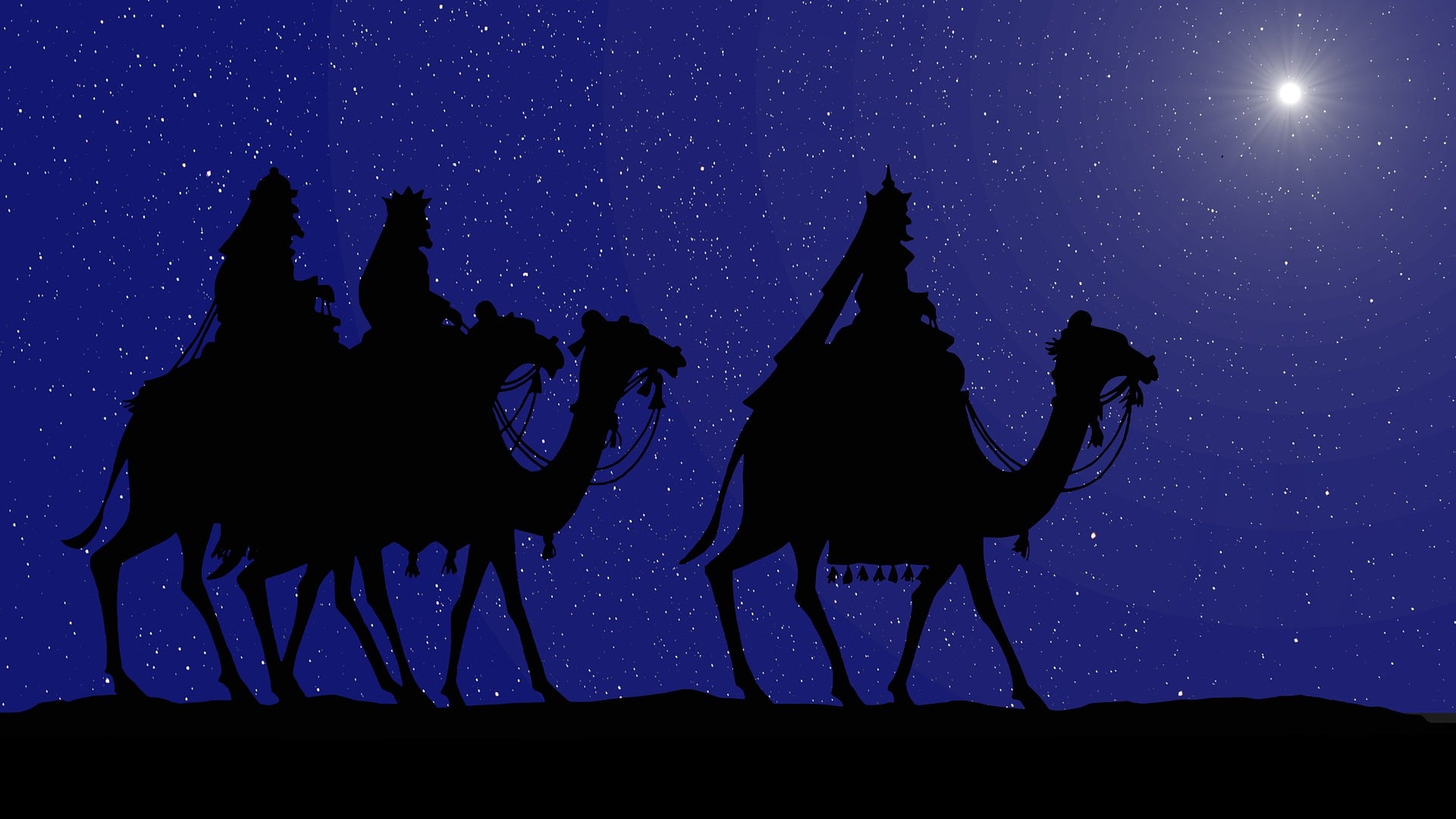
The Matthean narrative does not provide any definite information about the identity of the Magi. The term Magoi used in the text can mean “magicians,” and may also refer to the Magians, a Persian priestly caste connected with Zoroastrianism. Many scholars understand them as astrologers, since their journey was prompted by the appearance of a star. Later Christian tradition expanded their identity, describing them as descendants of Shem, Ham, and Japheth, the sons of Noah. Because Matthew mentions three gifts, tradition assumed there were three visitors and eventually portrayed them as kings. These traditions named them Melchior, King of Persia; Gaspar, King of India; and Balthasar, King of Arabia. Their coming was also interpreted as fulfilling Isaiah’s prophecy: “And nations shall come to your light, and kings to the brightness of your rising” (Isaiah 60:3).
Although much attention is often given to the identity of the Magi, Matthew directs the reader to deeper themes. These visitors began their journey from the East and arrived in Jerusalem asking, “Where is He who has been born King of the Jews?” (Matthew 2:1). In their story, the star plays a decisive role. Some explain it as Halley’s comet or as an unusual alignment of planets, but Matthew presents it as a supernatural sign pointing to the child in Bethlehem as the promised Messiah. The image of the star also recalls Balaam’s prophecy: “A star will come out of Jacob; a scepter will rise out of Israel” (Numbers 24:17). It can be inferred from the narrative that the Magi began their journey, focusing on the star that pointed to the king, without knowing the exact location where the child had been born. They knew only that a king had come into the world, and so their journey became an act of faith, much like Abraham’s obedience when he left his homeland at God’s command (Genesis 12:1–3). They were not deterred by dangers, challenges, or uncertainties on their path; rather, their attention remained fixed on the newborn King. Their example invites believers to pursue God with the same resolve, trusting God through every uncertainty and continuing the pilgrimage even when the path ahead is not fully clear.
The Gifts of Honor and Reception
The Magi presented gold, frankincense, and myrrh to the newborn king (Matthew 2:11). Gold was linked with kingship, because from earliest times objects made of gold were considered fitting for a ruler. Fragrant substances were also associated with royalty, since they were costly imports from distant lands. Myrrh appears among the royal gifts (1 Kings 10:25, Song of Songs 3:6–7), with the king’s carriage described as perfumed with myrrh and frankincense. Myrrh was also used in the high priest’s anointing oil (Exodus 30:23–33); royal anointing oil may have contained similar ingredients. Frankincense was used exclusively as the holy incense of the sanctuary (Exodus 30:34). Its presence in Matthew’s narrative is interpreted as pointing to the future worship of the risen Christ. Myrrh is used both in anointing oil and in burial preparations (John 19:39), and has been understood as foreshadowing the death of Jesus. Some interpreters suggest that gold was offered as a sign of Christ’s kingship, frankincense as a sign of His divinity, and myrrh as a sign of His future suffering. There is also a common interpretation that these gifts point to the royal, priestly, and prophetic offices of Jesus. However, above all these later interpretations, the Gospel writer presents gold, frankincense and myrrh as gifts suitable for a king.
The presentation of these gifts was not an attempt to please the King or gain favor. They were offered as an act of honor to the Messiah. The Gospels make clear that Jesus came to His own people, yet they did not receive Him. When His own rejected Him, it was ‘outsiders’ who came and offered gifts that expressed their respect and submission to Christ. This scene was understood as fulfilling the prophetic vision that the kings of the nations would bow before the Lord and bring their gifts to Him (Isaiah 49:7; 60:6; Psalm 72:10–11). Jesus came, lived, and died not only for a particular community. He was the joy for all the people and nations in the world. This narrative exhorts believers to offer themselves to Christ with the same sincerity. The Magi brought what they had of greatest worth; we are invited to bring the gift of our lives to God by engaging with the people of God and all creation around us. True worship is not measured by what we possess, but by the willingness to surrender ourselves to the Anointed One.
Turning from the Wrong Path to the Way God Reveals
The Magi who were searching for the newborn king had ended up in the palace of Herod, and their visit and search for the king had disturbed Herod (Matthew 2:3). Herod’s role in the early life of Jesus becomes clearer when the narrative of Matthew is compared with that of Luke. Luke’s story has no hostility or danger. According to Luke, Joseph and Mary turned away from the inn simply because it was full, and Jesus’ circumcision on the eighth day shows a calm and peaceful beginning of life. However, Matthew’s account is different. In Matthew, the birth of the Messiah takes place under the threat of Herod’s violent jealousy, and the story begins with tension and danger rather than peace. The violent reaction of Herod is described in the following passage, Matthew 2:16–18. The Gospel writer wants to communicate that the birth of Jesus takes place in a world already resisting Him, yet God’s purpose moves forward despite rejection and hostility.
The Magi first went to Herod’s palace, the wrong place. But they had the courage to return to the guidance God had already given them. They did not stay with Herod or depend on his welcome. Instead, they turned back, followed the star again, and finally reached the child. After meeting Jesus, God warned them in a dream to return home by a different route. This shows that God often works in surprising ways. The true King Messiah was found not in a palace but in a simple house, born into a carpenter’s family. The passage teaches us to stay alert to God’s unexpected guidance and to follow His direction even when it leads us away from our assumptions. The Magi corrected their mistake, listened to God, and chose a new path. Their example encourages us to turn from wrong choices and walk in the way God shows us by trusting His leading above our own plans.
This passage reminds us that a sincere and steady search will always lead us to Jesus Christ. The journey may bring challenges and uncertainties, but we are called to offer our best to our King. Meeting Jesus changes our direction and opens new paths in life. Our joy in Christ grows as we walk with dedication and give our lives to Him. When we surrender ourselves to Christ, He leads us into the new and life‑giving ways God has prepared.